Blog
Best Use Cases for Heavy-Duty Grating
Heavy-duty grating has a higher load bearing capacity than standard-duty options. Learn more about best use cases for heavy-duty designs.
Sep 25, 2026

It’s easy to make mistakes when specifying ADA-compliant grating, whether it’s not accounting for slope or failing to consider installation conditions.
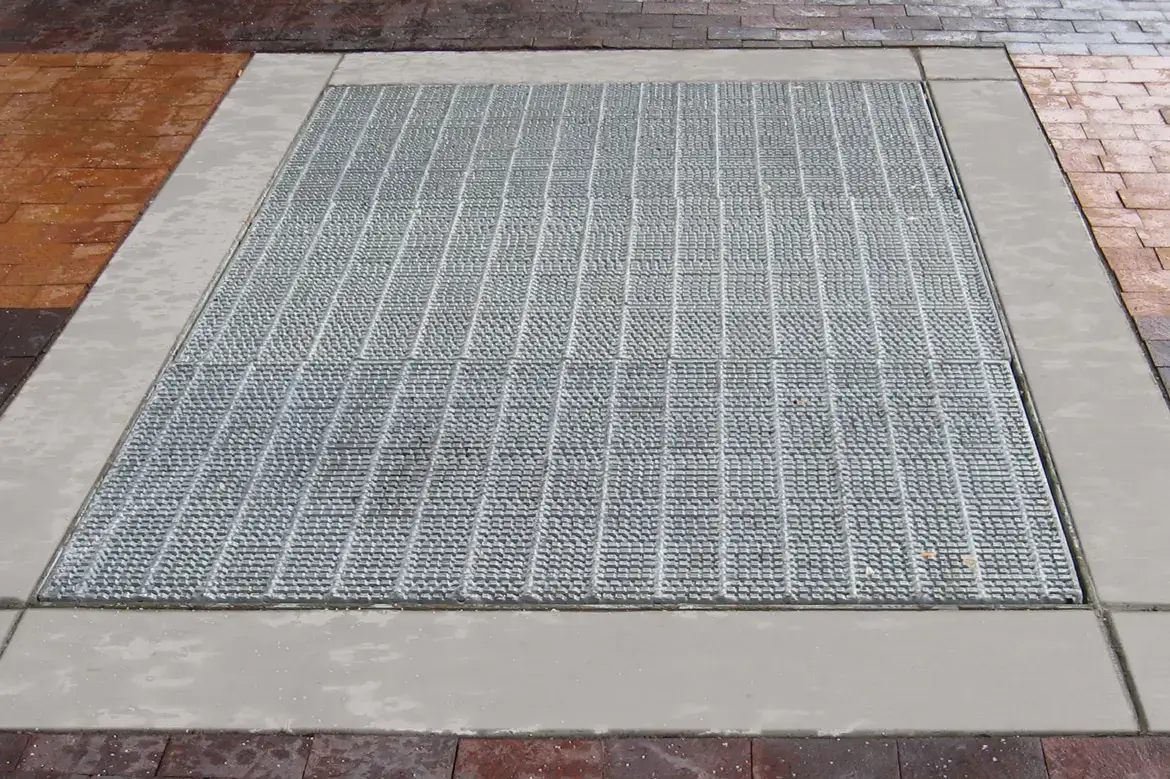
While stock grating exists, many grates must be custom-made for the application. When you’re specifying grating for your application, our team needs to know load requirements, bearing bar dimensions, cross bar spacing, panel size, surface finish requirements, and any certification standards, such as ADA compliance.
ADA-compliant grating has specific characteristics, including opening size (no greater than 1/4”), panel orientation (direction of travel), slip resistance (can be achieved several ways), and edge transitions (no more than 1/4” without treatment, 1/2” with a beveled edge).
If you need ADA-compliant grating, avoid these mistakes our team commonly sees:
The openings between bearing bars and cross bars are rectangular; the long dimension of these openings must be perpendicular to the dominant direction of travel, per ADA standards. When specifying your grating, indicate how it will be installed. A grating panel that’s compliant in one orientation can be non-compliant when turned another way, even when the panels physically fit.
“Heel-proof” is just a marketing term. It’s not part of the ADA standard. Heel-proof designs can be great for sidewalk applications in high-traffic pedestrian areas, but the grating must have an opening size no more than 1/4” in the orientation of travel for it to be truly ADA-compliant.
Not all pedestrian areas are even. If your grating is being installed on a sloped surface, the added tilt can actually change the grating’s opening geometry, so much so that the grating, after installation, is non-compliant.
Your engineers are focusing on structural capacity, drainage, environmental durability, and cost, but ADA compliance focuses on more than just structural safety. Transition thresholds, opening sizes, surface texture, edge protection, and how the grating integrates with the entire route must be considered. If you have an in-house ADA coordinator, ensure you consult them before specifying the grating for your project. Your grating may be structurally sound, but non-compliant.
Loose grating is a safety hazard, so panels must fit securely and not shift or deflect when exposed to foot or wheelchair traffic. Under ADA, steel grating should be firm, stable, and slip-resistant, so always specify how the panels will be secured to the frames (whether with clips, bolts, or welds) to avoid gaps, lips, or level changes.
Achieving complete ADA compliance isn’t just about selecting the right grating. It’s about specifying the complete installed condition because orientation, slope, attachment, and coordination all matter.
Laurel Custom Grating offers standard and custom-made steel grating, including short-span and long-span ADA options. Visit our website to learn more about our capabilities, or contact us today to get started with a project analysis and quote.
Heavy-duty grating has a higher load bearing capacity than standard-duty options. Learn more about best use cases for heavy-duty designs.
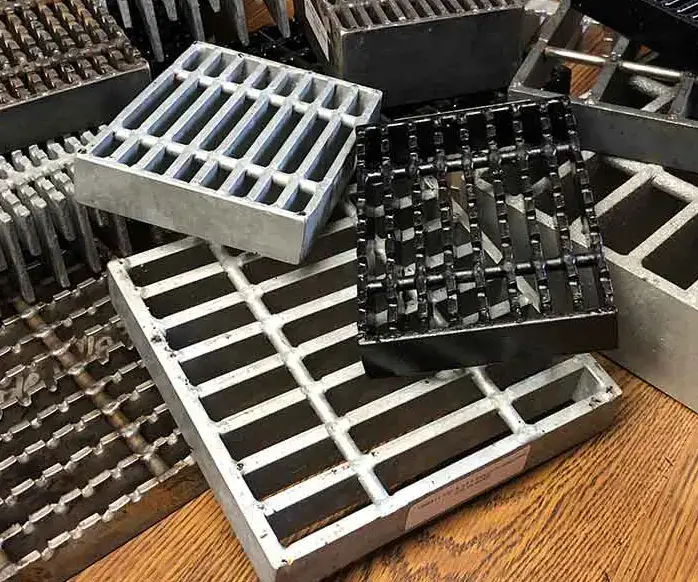
Does your application need welded or press-lock heavy-duty grating? This article explores the differences between the two designs, including benefits and use cases.

Learn more about the differences between mill finish, painted, and galvanized coatings, and best use cases for each.
We’re ready to fulfill your manufacturing needs. Take the next step to work with Laurel Custom Grating as your source for heavy-duty grating solutions.